 ENG
ENG
 INA
INA
Collaboration between the International Relations Department of FISIP UI and International Relations Udayana University: SDGs 12 Zero Food Waste Campaign “Small Steps, Global Impact” at SMA Negeri 7 Denpasar

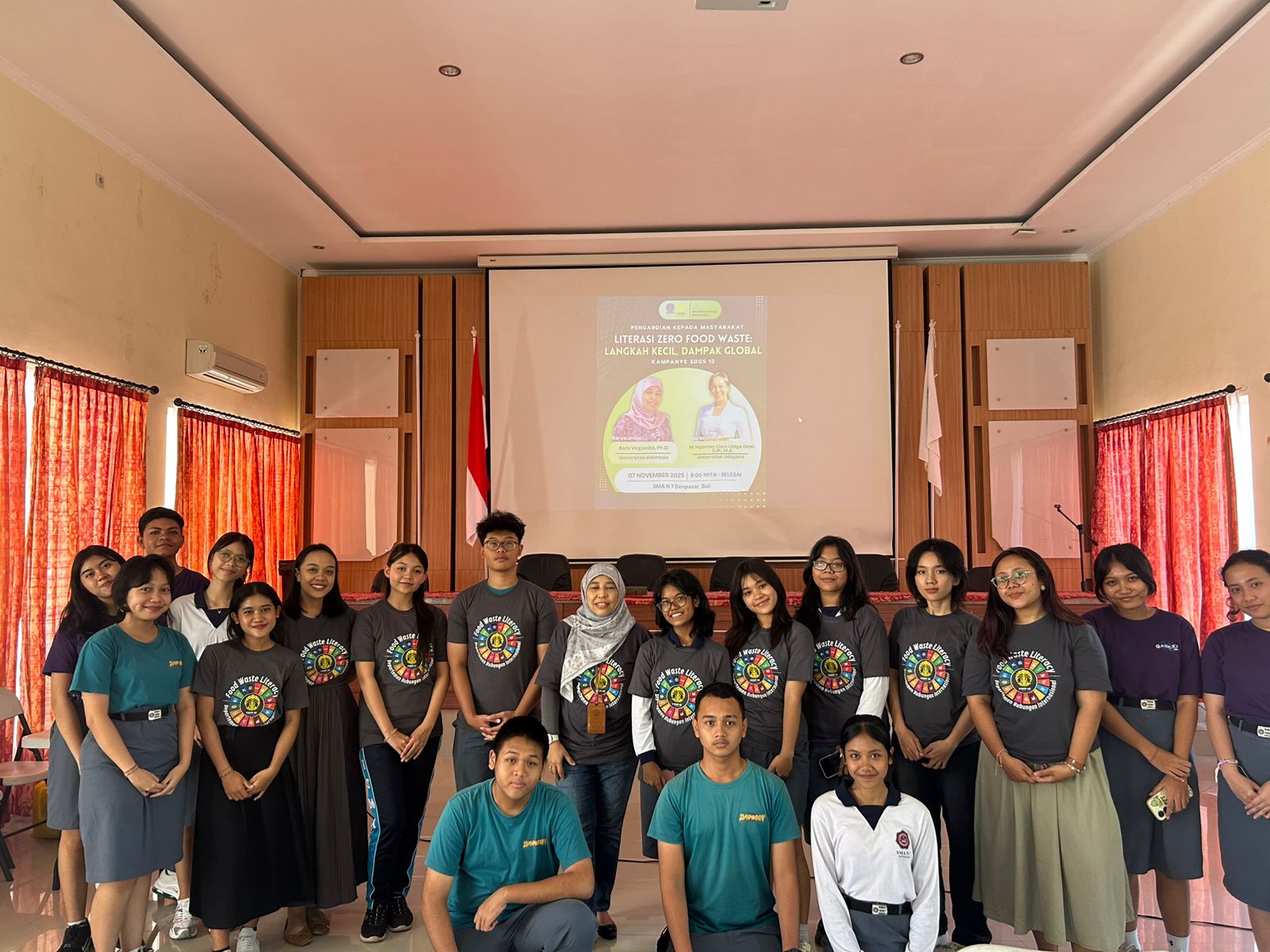
The International Relations Department of the Faculty of Social and Political Sciences at Universitas Indonesia, in collaboration with the International Relations Study Program of the Faculty of Social and Political Sciences at Universitas Udayana, held an educational outreach and campaign titled “Zero Food Waste: Small Steps, Global Impact.” This initiative is part of their community service program as an implementation of the Tri Dharma of Higher Education.
The activity supports the achievement of Sustainable Development Goal (SDG) 12: Responsible Consumption and Production. The event took place at SMA Negeri 7 Denpasar on Friday (7/11) and was attended by approximately 100 students.
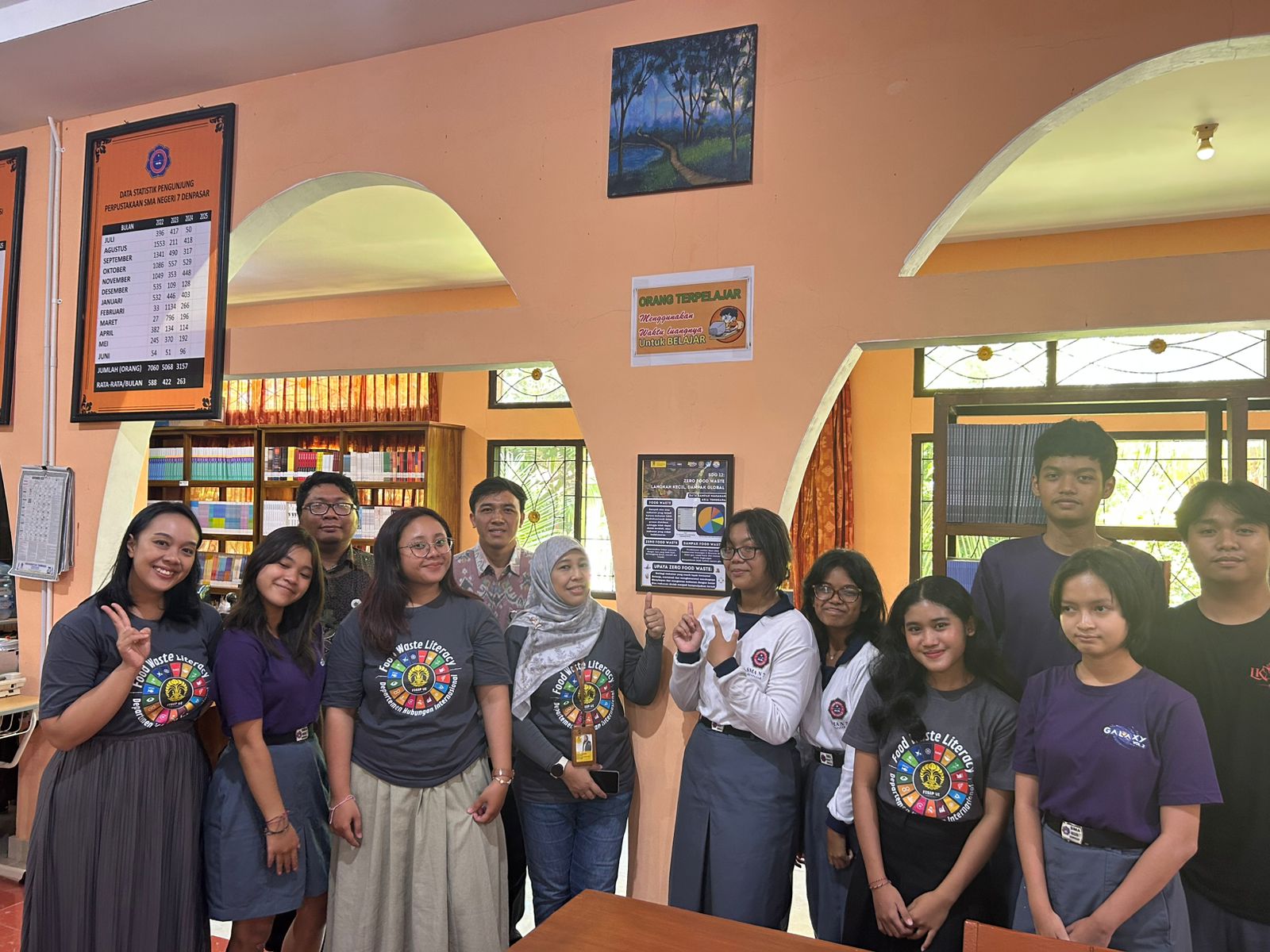
The campaign aimed to raise students’ awareness about the high level of food waste in Indonesia and its impacts on the economy, food security, and climate change. Students participated in a series of educational activities, including a socialization session, the installation of an SDGs 12 campaign poster in the school library, interactive quizzes, and a group performance of the “SDGs Song” created by Gracia Paramita, a lecturer in International Relations at FISIP UI.
The event began with welcoming remarks from the Principal of SMA Negeri 7 Denpasar, Cokorda Gede Anom, M.Pd., who expressed appreciation for the collaboration between higher education institutions and secondary education.
“We greatly appreciate the initiative of the International Relations Department of FISIP UI and Udayana University in bringing an educational campaign like this into the school environment. Collaborations like this broaden our students’ perspectives and instill sustainability values from an early age,” he stated.
He also emphasized the importance of building environmental awareness and social responsibility among the younger generation and expressed hope that such initiatives could inspire other schools in Bali and across Indonesia.
A lecturer in International Relations at FISIP UI, Asra Virgianita, Ph.D., who attended as the representative of the International Relations Department and served as a speaker, highlighted that amid the global food crisis and the threat of climate change, the issue of food waste has become increasingly relevant.
Food waste refers to food that is still fit for consumption but is discarded—whether at the household level, restaurants, markets, or within the food industry. Its impact extends beyond economic and environmental losses, revealing social inequality: millions suffer from hunger while millions of tons of food are wasted each year.
Indonesia is currently the largest contributor of food waste in Southeast Asia, with more than 20 million tons of food discarded annually. Ironically, this occurs alongside high rates of stunting and malnutrition in various regions of Indonesia.
This is where students play a crucial role. As a generation growing up with strong digital and social awareness, they have the power to change mindsets and behaviors within their communities. They are not merely consumers, but also agents of change.
Asra emphasized that the Zero Food Waste campaign must begin in educational spaces.
“Imagine if every student starts bringing appropriate portions of food, finishing their meals, and encouraging their friends to do the same. The impact could multiply,” she explained.
Representing Udayana University, Ni Nyoman Clara Listia Dewi, M.A., added that initiatives like this serve as a model for campus–school collaboration in promoting sustainability literacy in Bali. Such synergy is essential for building young people’s awareness of global issues that have local impacts, such as food waste.
Clara also noted that the food waste situation in Bali has unique characteristics. As a major tourism destination and cultural center, Bali faces significant challenges in managing food waste. One substantial source comes from leftovers generated during religious ceremonies, which are an integral part of Balinese life.
Ceremonies such as Galungan and Ngaben often produce considerable amounts of food waste, particularly from offerings and dishes that are not consumed.
“Campaign activities like this not only deliver information but also build networks for action. When high school students begin to understand and voice sustainability issues, they are not just learning—they become part of the solution,” she concluded.
The enthusiasm of students at SMA Negeri 7 Denpasar was evident throughout the SDGs 12: Zero Food Waste campaign. They actively responded to questions with great energy, demonstrating strong understanding and curiosity regarding food waste and the role they can play.
Beyond participating on-site, students also amplified the Zero Food Waste message through social media posts, expanding the campaign’s reach and impact among other young people.
Gallery
UDAYANA UNIVERSITY