 ENG
 INA
International Relations Study Program of Udayana University Partners with Women in Tourism Indonesia to Explore Gender and International Tourism
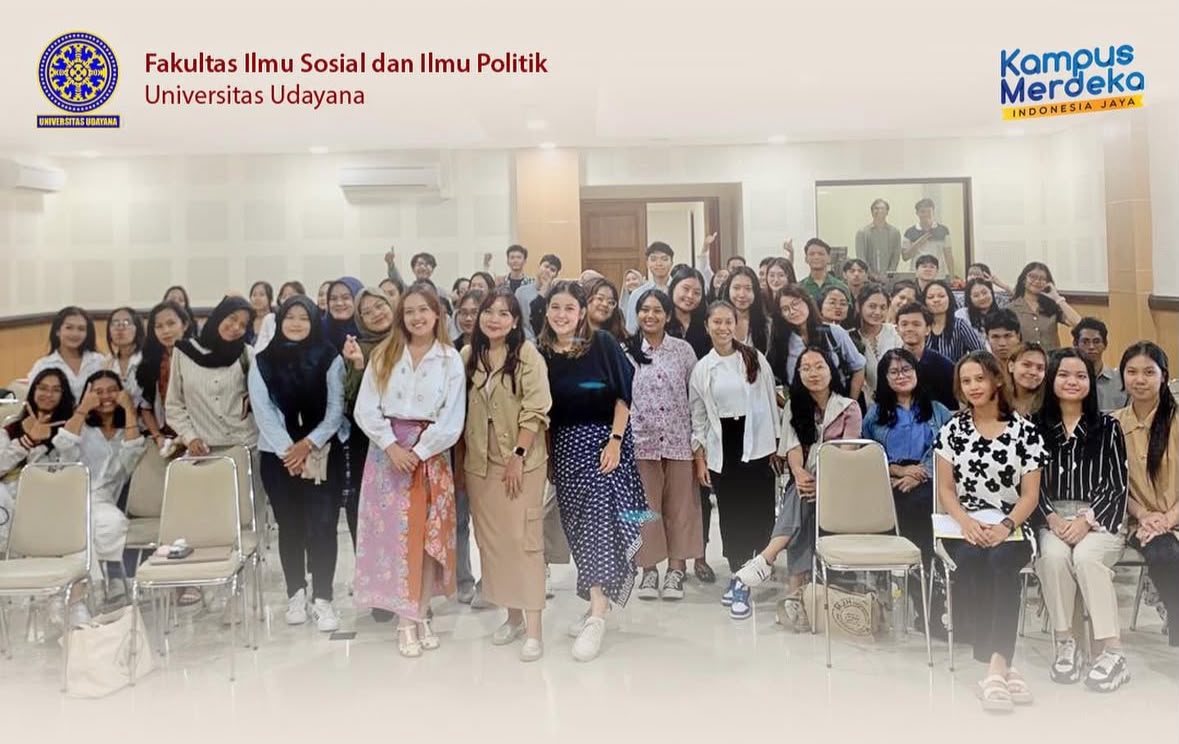
Denpasar – The International Relations Study Program at the Faculty of Social and Political Sciences (FISIP), Udayana University (UNUD), established a partnership with the Indonesian Foundation for Women in Tourism (Women in Tourism Indonesia) through the signing of a cooperation agreement on 7 May 2024. The signing was attended by the Dean of FISIP and the Coordinator of the International Relations Study Program at Udayana University, demonstrating institutional support for academic and professional collaboration in tourism, gender, and international relations.
As the first initiative under this partnership, the two institutions organized a public lecture entitled “Unveiling Gender Dynamics in International Tourism: Exploring Soft Power Strategies in the Industry.” The event was attended by approximately 80 International Relations students enrolled in the Tourism in International Relations and Soft Power course, alongside members of the general public. The lecture provided a learning platform to broaden participants’ understanding of the connections between gender dynamics, tourism policy, and soft power strategies in the international tourism industry.
The event was opened by the Head of the International Relations Study Program at Udayana University and moderated by Ratih, a lecturer in the program. Two speakers from Women in Tourism Indonesia, Anindwitya Rizqi Monica and Laras C. Laksi, Co-Founders of the organization, shared their perspectives and experiences concerning gender issues in the tourism and creative economy sectors.
During the session, Anindwitya Rizqi Monica presented “Gender and Policy Tourism for Workers,” discussing the relationship between gender, tourism policy, and workers in the industry. Meanwhile, Laras C. Laksi delivered a presentation on gender mainstreaming policies in the tourism and creative economy sectors. Both presentations highlighted the importance of incorporating gender perspectives into tourism policymaking and implementation, particularly in promoting more equitable opportunities and participation among industry stakeholders.
Following the presentations, the discussion continued with comments from Ratih, who served as both moderator and respondent. From an International Relations perspective, the discussion demonstrated that tourism extends beyond economic activities and cross-border mobility, encompassing broader social, political, and cultural dimensions. Tourism can serve as an instrument of soft power through cultural exchange, destination image-building, and interactions among societies. At the same time, a gender perspective is essential to understanding how tourism policies and industry practices may affect different groups within society in different ways.
The public lecture marked an initial step toward strengthening connections between academia and practitioners in the tourism sector. Through collaboration with Women in Tourism Indonesia, students gained the opportunity to connect theoretical concepts learned in the classroom with practical experiences and challenges within the tourism industry. The partnership also created opportunities for knowledge exchange on contemporary issues at the intersection of gender, tourism development, and international relations.
Moving forward, the collaboration between the International Relations Study Program at Udayana University and Women in Tourism Indonesia is expected to continue through various academic and professional initiatives. This partnership aims to broaden students’ perspectives and encourage further exploration of the intersections between tourism, gender, and international relations, both in academic research and professional practice.
UDAYANA UNIVERSITY