 ENG
ENG
 INA
INA
The International Relations Study Program at Udayana University (UNUD) welcomes the partnership with the Indonesian Ministry of Foreign Affairs.
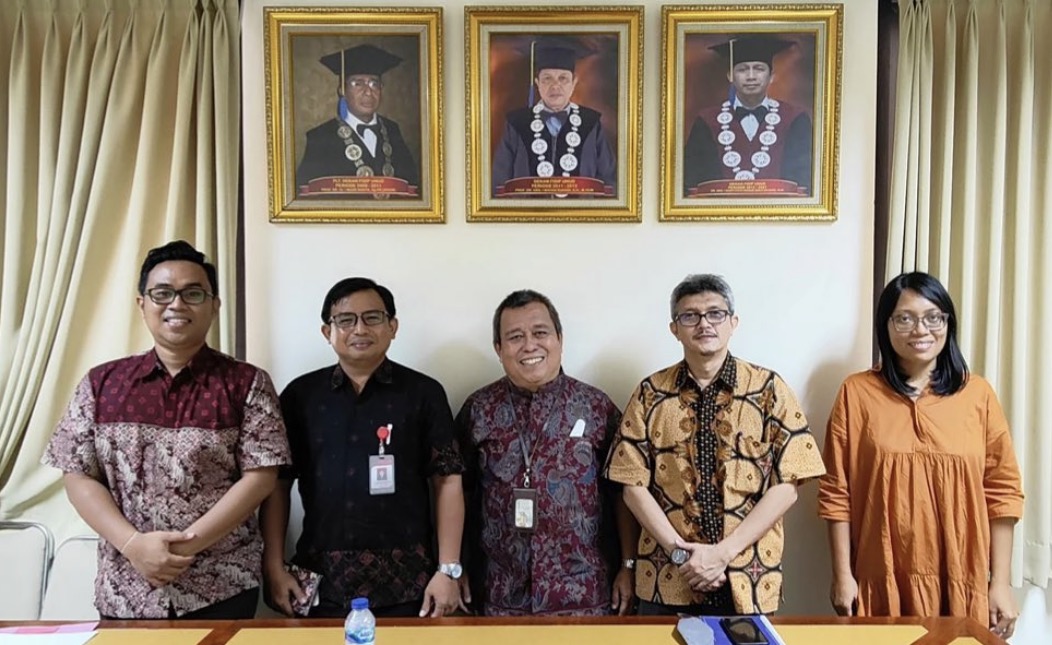
The Faculty of Social and Political Sciences, Udayana University, continues to strengthen its internationalization efforts by initiating collaboration with the Ministry of Foreign Affairs of the Republic of Indonesia through a socialization program on “South-South” international cooperation. This initiative represents a strategic step toward expanding academic networks and enhancing the relevance of International Relations studies in a global context.
The visit from the Ministry’s representatives, Irvan Fachrizal and Fachry Sulaiman, was warmly welcomed by Dr. I Made Anom Wiranata, along with faculty members from the International Relations Study Program. The meeting was conducted in an interactive and collaborative atmosphere, focusing on potential areas of cooperation.
South-South cooperation refers to collaborative initiatives among developing countries that have been evolving for decades. It serves as an important mechanism for fostering shared development, knowledge exchange, and global solidarity. Despite its strategic significance, this topic remains relatively underexplored in academic circles, particularly as a focus of student research within the field of International Relations.
Through this socialization program, students are expected to gain a deeper and more comprehensive understanding of the importance of South-South cooperation in today’s global landscape. Furthermore, the initiative aims to encourage the development of new research interests that can enrich academic discourse, especially regarding Indonesia’s role in fostering cooperation among developing nations.
During the discussion session, the Ministry also introduced various concrete opportunities available for the academic community of FISIP Udayana University. These include internship programs at the Ministry of Foreign Affairs, student exchange programs, faculty exchange initiatives, as well as collaborative research and publication opportunities with universities across the ASEAN region. Such opportunities provide valuable exposure for both students and faculty to actively engage in international cooperation practices.
Moreover, this collaboration aligns with the implementation of the Merdeka Belajar–Kampus Merdeka policy, which encourages students to gain experiential learning beyond the classroom. Through this partnership, students are expected not only to understand theoretical concepts but also to apply their knowledge in real-world international contexts.
Overall, this initiative is expected to strengthen institutional partnerships and expand the academic network of the International Relations Study Program. In the long term, the collaboration is anticipated to contribute to enhancing the quality of education, research, and academic engagement in addressing global challenges.
UDAYANA UNIVERSITY